Research Interests
I am an ecophysiologist with broad interests in exercise and digestion physiology, energy metabolism, and behavioral ecology. The questions I find most interesting are how marine animals, specifically fish, persist in challenging environments. Using integrative approaches from whole-animal to biochemical techniques, my research aims to use physiology to understand the linkages between environmental variability, organismal performance, and ecological patterns.
Current Projects
|
My PhD thesis work focuses on whether limitations on physiological performance explain winter dormancy in fishes. Frigid winter temperatures are a key bottleneck on the persistence of fish populations at high latitudes. Thus, winter dormancy (an inactive, fasting, low metabolic rate state) has evolved among some temperate fishes to endure winter and potentially extend their poleward range. Few studies investigate winter dormancy and rarely focus on what causes these fish to go dormant. The overarching hypothesis of my current research is that the physiological performance (swim performance, muscle function, growth and digestive processes) of dormant fishes is optimized for warmer temperatures, thus winter dormancy is used as an energy savings strategy in the cold.
|
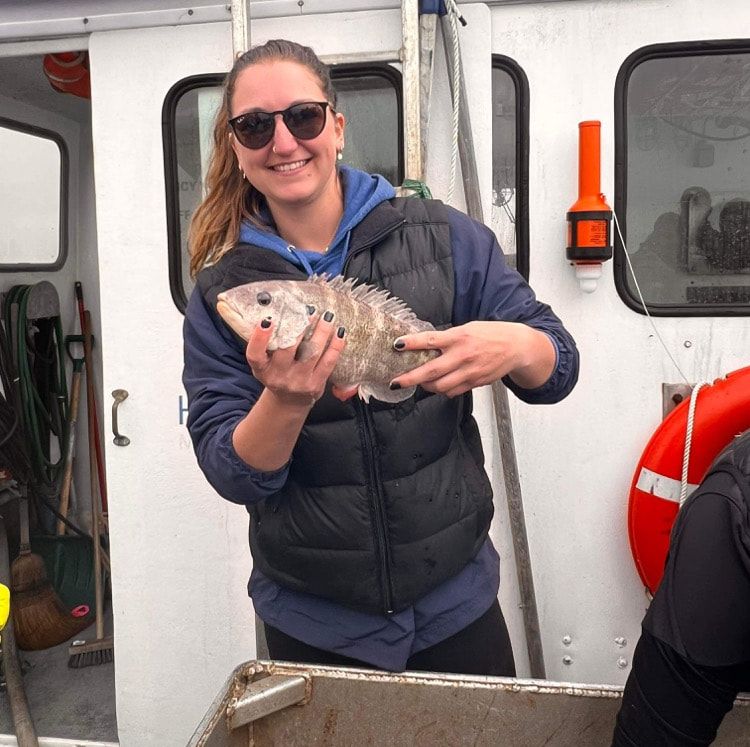
Current study species, cunner (T. adspersus)
|
Past Projects
|
In collaboration with Dr. Jim Kieffer, I investigated the effects of temperature on post-exercise recovery in brook char (S. fontinalis), specifically if certain metabolic processes play a role in driving temperature-dependent recovery. For example, is it more advantageous to recover oxygen debt faster at cooler temperatures or remove lactate quickly at warmer temperatures? This project examined the influence of temperature on recovery processes and behavioral thermoregulation following exhaustive exercise in juvenile brook char. Using biochemical techniques, whole-organism respirometry, and thermal preference, we found that a cooler recovery regime facilitated excess post-exercise oxygen consumption (EPOC) recovery, hindered lactate clearance, and did not affect behavioral thermoregulation. This work is currently available as a preprint.
|
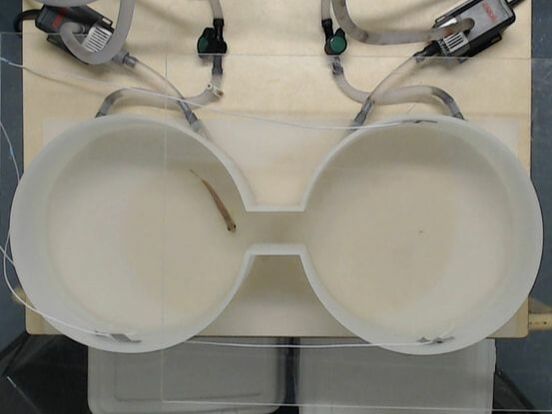
Juvenile brook char (S. fontinalis) in temperature preference system
|
|
My previous research in the Esbaugh Lab at the University of Texas Marine Science Institute investigated the effects of oil exposure on larval and juvenile red drum (S. ocellatus), a key fish species in the Gulf of Mexico. Oil exposure results in compromised cardiorespiratory function and swim performance in fishes, particularly in early life stages that are more susceptible to toxicity. This presumably alters ecological performance by impairing the ability to capture prey or evade predators, however, this was yet to be empirically tested. My research therefore sought to answer those questions by investigating predator-prey behavior, olfaction cues and preference, and swim performance. These projects were a part of the Recover Consortium funded by the Gulf of Mexico Research Initiative and resulted in two publications (see Publications).
|
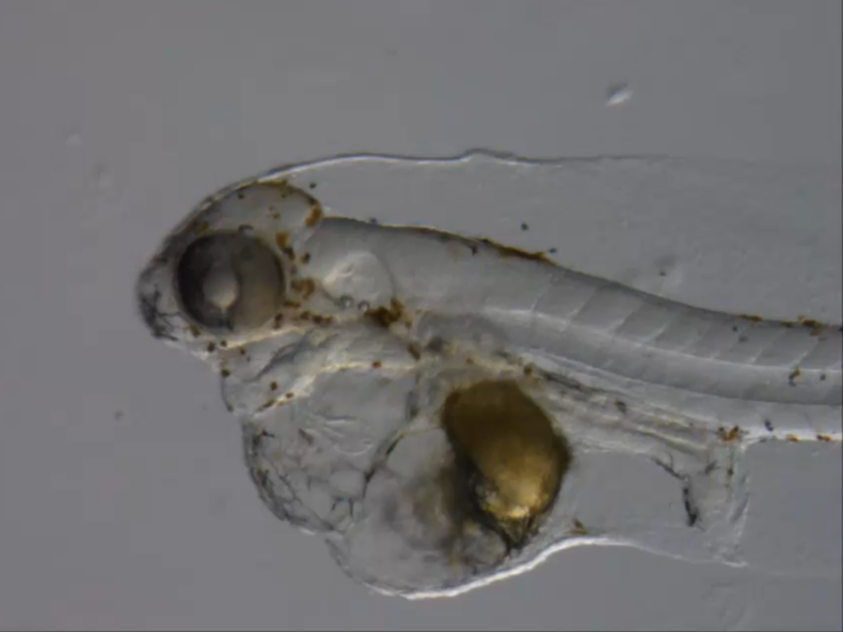
Red drum (S. ocellatus) larvae 72 hpf after oil exposure
|
|
During an undergraduate field course in Akumal, Mexico in 2015, my research group studied the effects of snorkel-based tourism on the escape behavior of reef fishes. Fear of predation affects prey behavior by altering movement patterns, lowering feeding, and reducing reproduction. The North shore of Akumal Bay had seen a dramatic increase in tourism over the past decade while the South shore remained undeveloped. The stark difference in human presence across an otherwise homogeneous environment created a perfect study site to elucidate tourism impacts on the escape behavior of prey fish species, as well as habitat complexity and use.
|
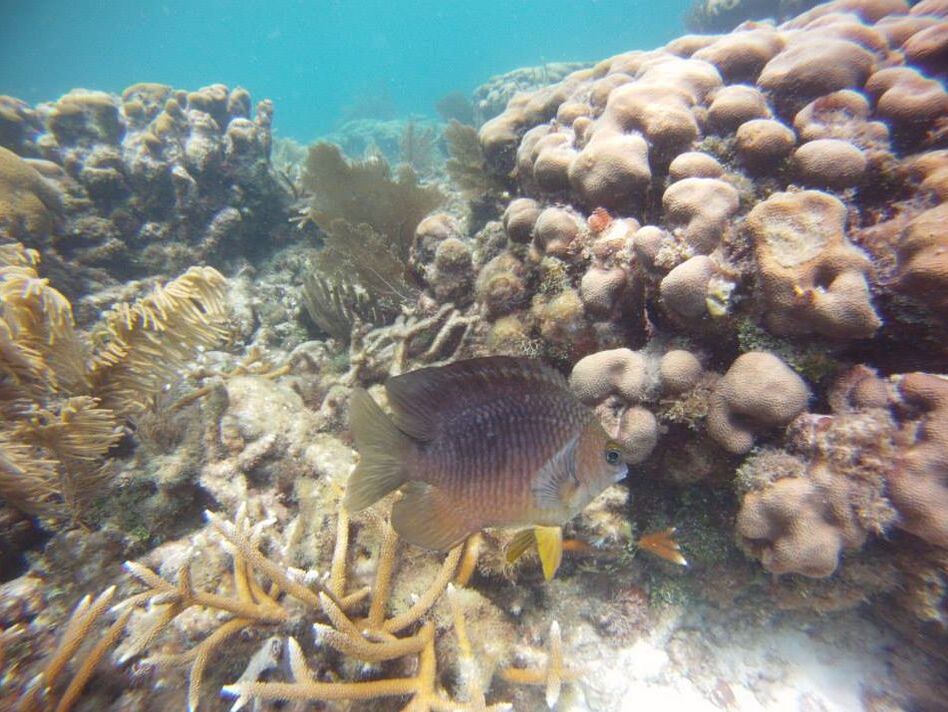
Threespot damselfish (S. planifrons) on reef in Akumal, Mexico
|